

London buses: Better buses
Does TfL's project to improve bus experience go far enough?

tl;dr: A new ‘high-spec’ interior borne out of improvements trialled on the 63 falls short in just the way you’d imagine.
Having discussed the inconsistency in bus interiors, a political stunt aimed at creating a bespoke bus for London and the resulting legacy, let’s take a look at what Transport for London (TfL) are doing right now to improve bus journeys across London.
Route 63
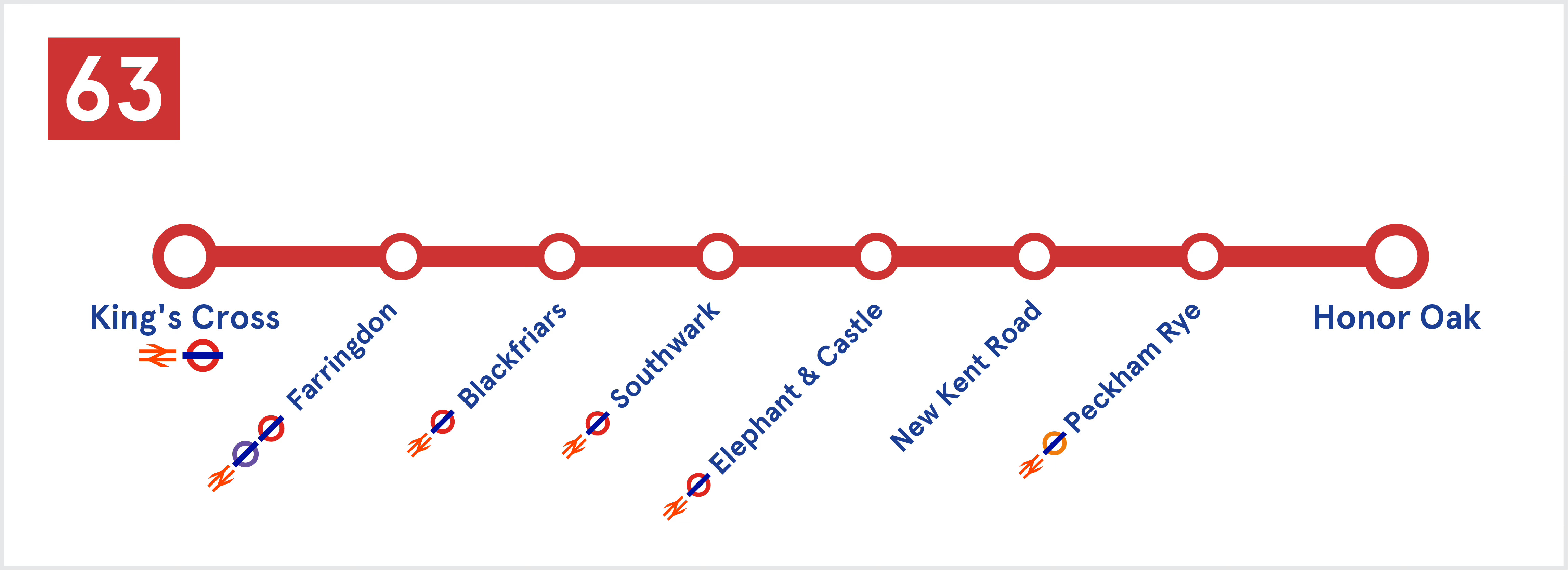
The 63, a north-south bus route running from King’s Cross down to Honor Oak (one of the few times it’s apparently fine to misspell honour), has been used by TfL as a test bed for bus innovation since 2022.
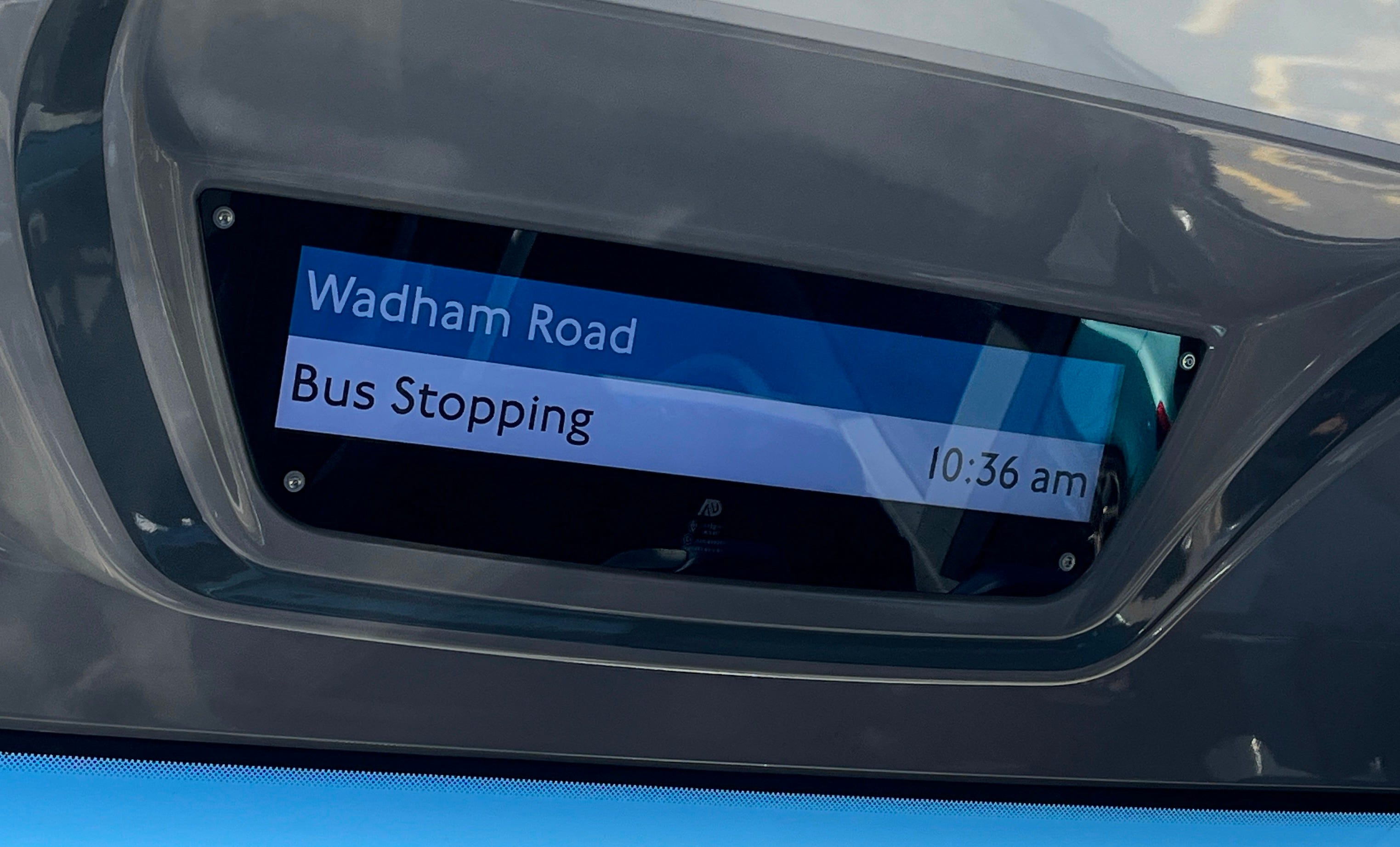
Its stops have been home to trials of Countdown replacement prototypes, and it was one of the first routes to feature new iBus passenger displays (posts on this are in the pipeline) and LCD destination blinds.
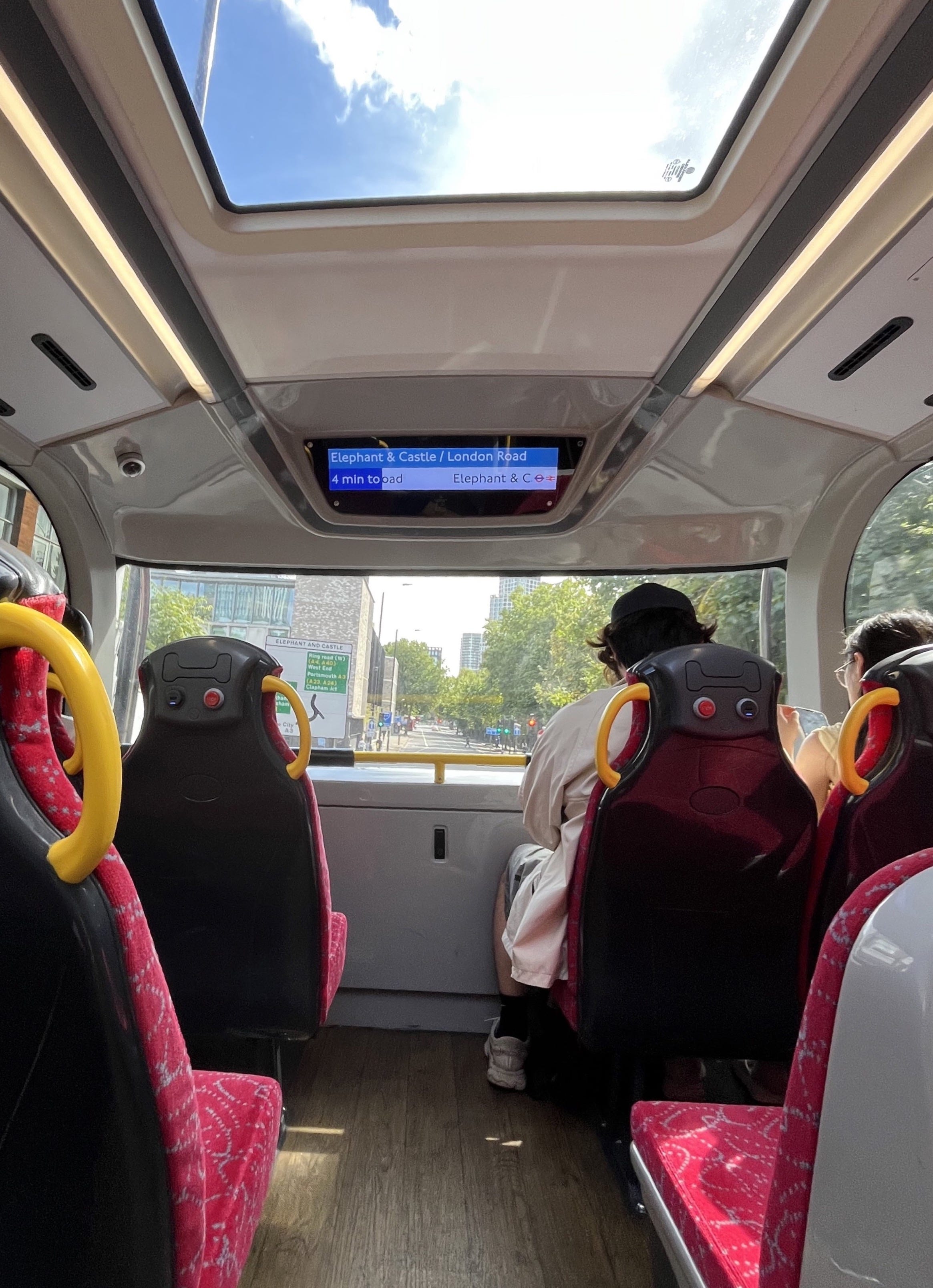
What will stand out most to a typical bus passenger though are the rather swanky interiors:
What are the changes?
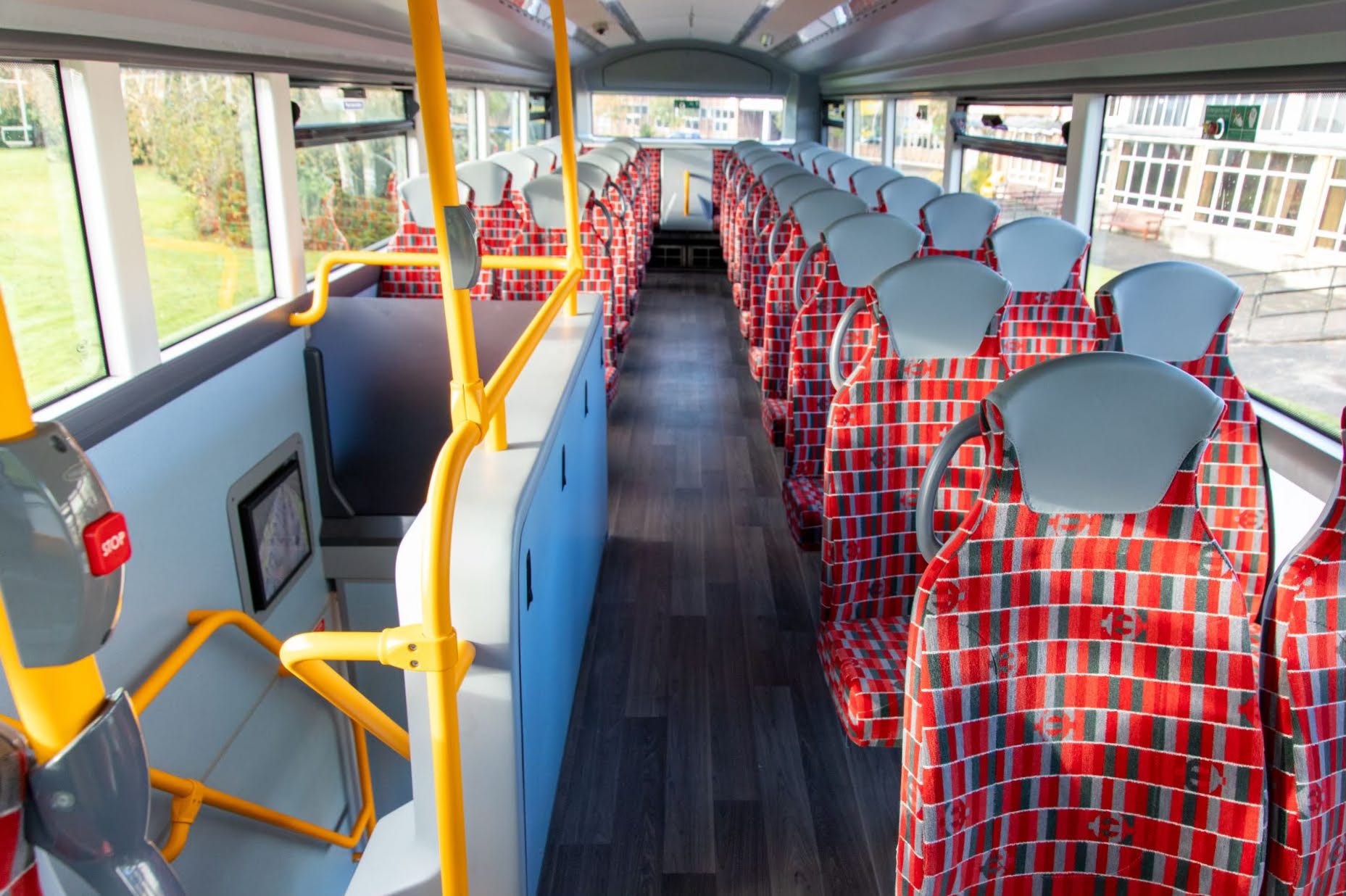
The most obvious change is the introduction of high-back seats - offering enhanced comfort and perhaps even privacy. These have charging ports (USB-A, but let’s take what we can get) and an integrated phone holder in the headrest in front, plus a stop button for each seat pair.
If you’re in the front row, unfortunately you’ll have to hold your phone, and I’m not sure how you can request your stop without intruding on another passenger (or hoping someone else also wants to get off) - but you’ve bagged the best seats, so don’t complain.
Thanks to integrated handles and stop buttons on seats, there are fewer grab poles throughout the upper deck and toward the rear of the lower, which makes the space feel strikingly more open than other buses. (One hidden benefit of this is there’s less to re-attach in the event of an oopsie...)
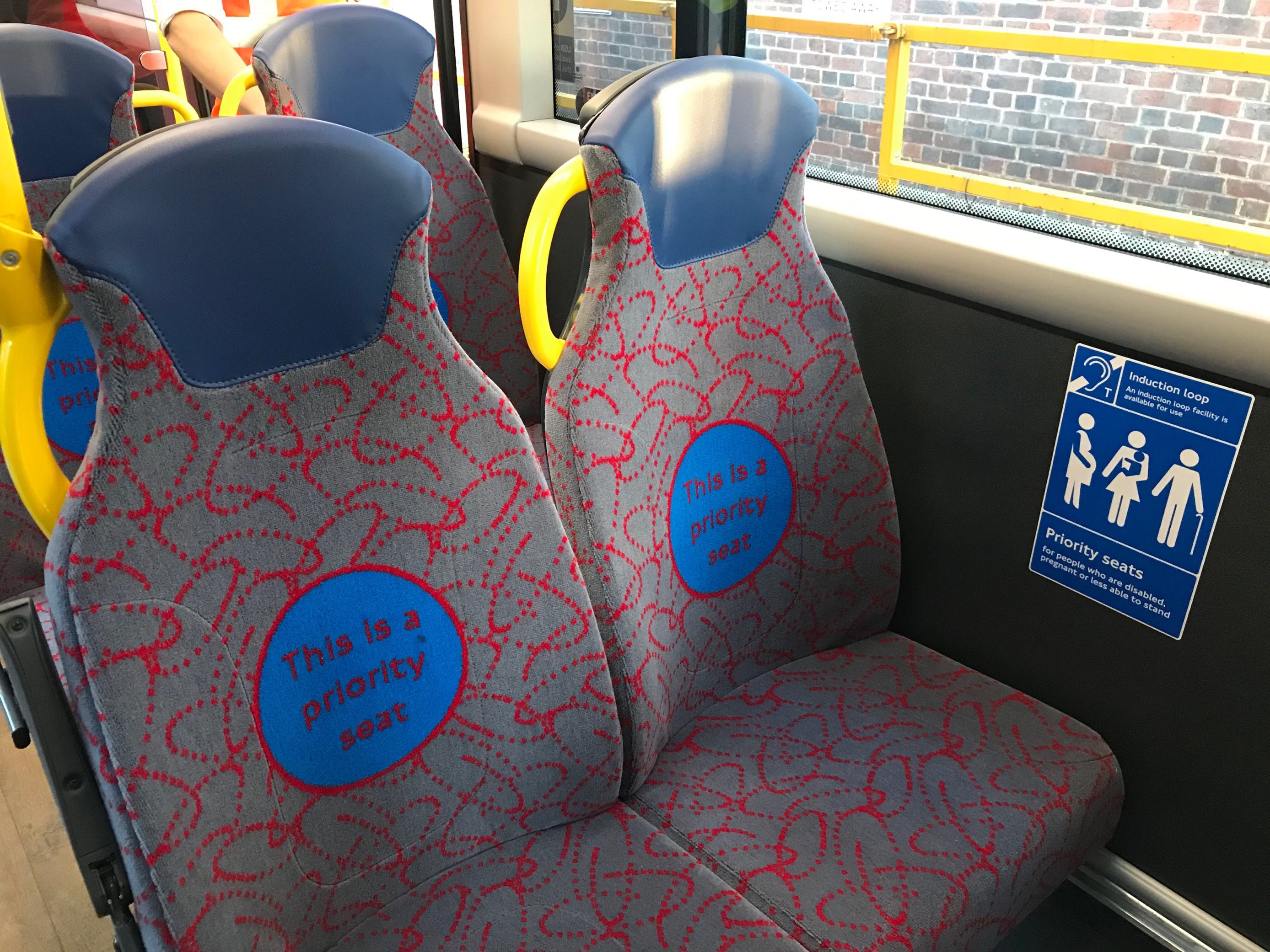
Further changes include wood-effect flooring, a bigger wheelchair space, and a large skylight that floods the upper deck with natural light. Seats prioritised for those with reduced mobility are also now more distinct thanks to being emblazoned with “This is a priority seat” woven into the moquette itself - reducing the available space for operators’ hideous seat patterns.
What’s the big idea?
Encouraging bus usage is a big part of TfL’s ongoing strategy to boost public transport’s market share and meet environmental targets. This is a critical piece of that puzzle - if taking the bus can be pleasant and comfortable in addition to safe, predictable and reliable, then it’s sure to drive people out of their cars.
As it stands, taking the bus is already excellent value - a £1.75 flat fare for unlimited journeys within one hour of touching in (capped daily at £5.25) - and if passengers are getting a high-quality experience for that, then taking the bus is a no-brainer.
Following the roll-out of improvements on the 63, TfL commissioned research to identify which changes impacted passengers’ “willingness to pay”:
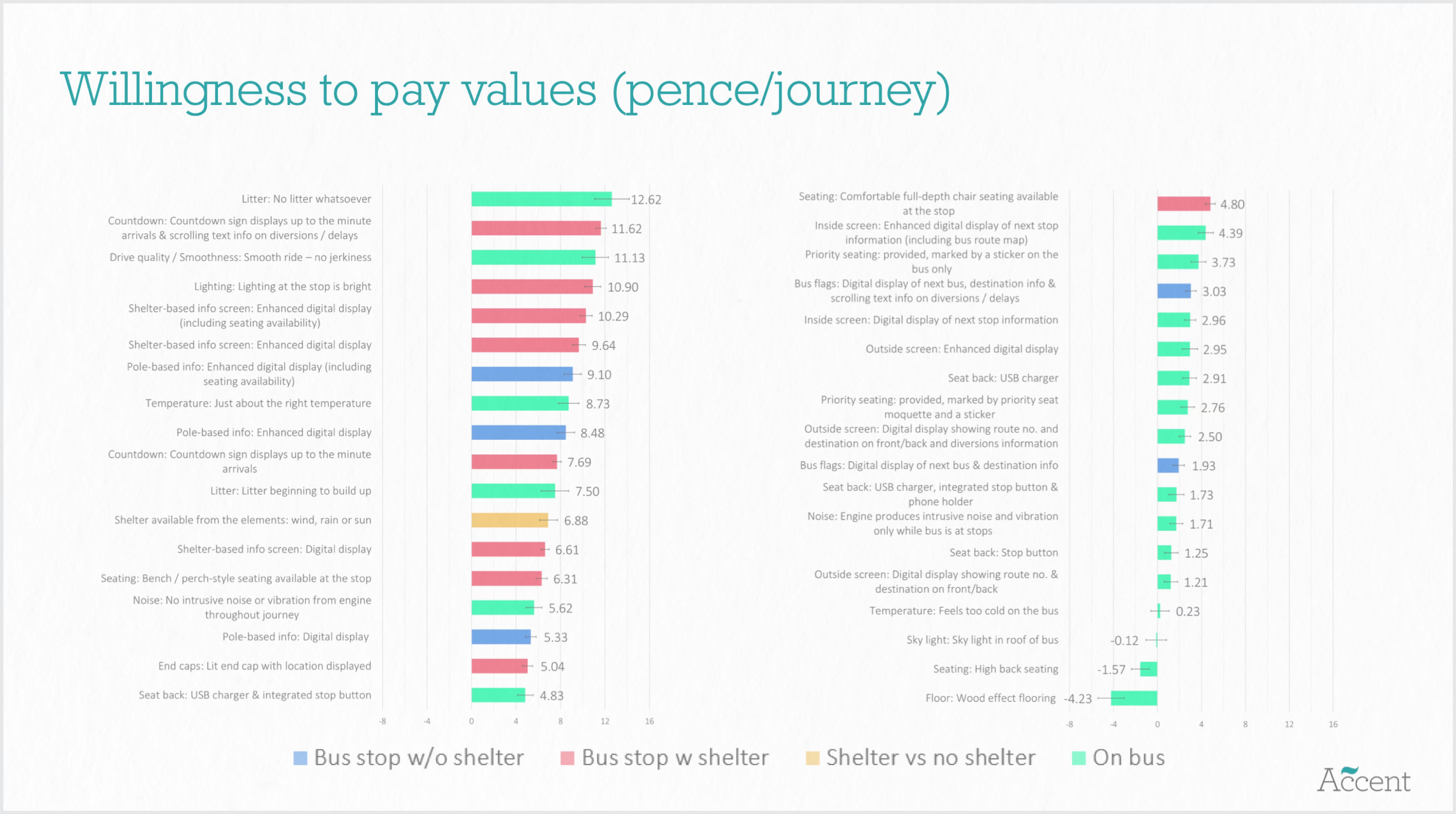
While I find some of these items a touch leading, it’s interesting nonetheless. A lack of litter, engine noise and temperature are all substantially more important to passengers than a seat-back phone holder, for example. Nice-to-haves such as high-back seating, skylights and wood-effect flooring don’t appear to be considered particularly important at all.
I can’t help but wonder, though - is “willingness to pay” really the right metric here? With bus travel as affordable as it is in London, perhaps this should have been about “willingness to take the bus” - after all, at such a low fare, does value even come into it?
According to a rather helpfully made FOI request, the most common themes in passenger comments about changes seen on the 63 include that the interior colour design isn’t liked (second), and that the seat moquette isn’t a TfL standard (third). Aha, vindication at last! Other themes include that features of the Boris bus haven’t been retained (namely the three door / two staircase arrangement, bench-style seating and even the burgundy/bronze colours) and some negative sentiment about high-back seats.
There’s also useful insight on how the iBus isn’t the best for wheelchair users - something that has cued changes in the latest specification - and I’ll mention when I come to write about the iBus.
Beyond London
‘Premium’ bus interiors are nothing new - national operators have been doing this on select routes across the UK through products such as Stagecoach Gold and Arriva Sapphire for almost two decades. By offering a ‘luxury’ passenger environment, they can appeal to a different demographic, and justify charging higher fares - something you’d hope would boost ridership and revenues in one go. Where it works, for operators it’s a win-win.
This type of product is absent in London, where services are run under contract to TfL and so operators are isolated from commercial considerations. Could the experiment on the 63 be a sign of TfL finally realising the importance of bus interiors to boosting bus ridership?
Beyond the 63
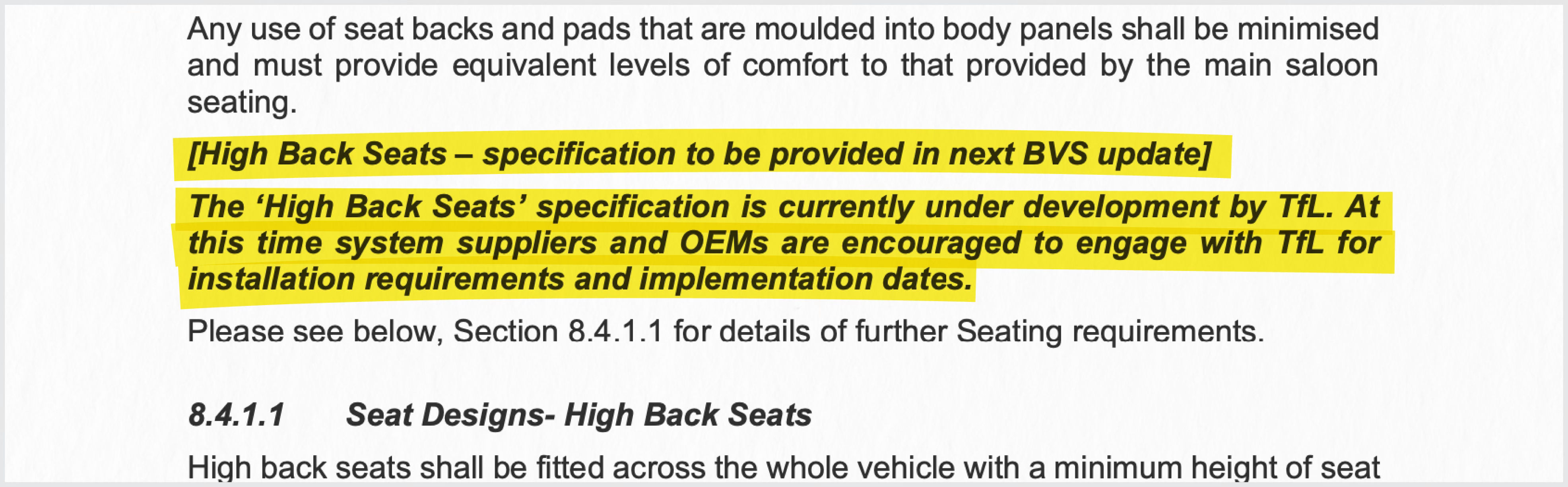
The improvements seen on route 63 form part of a new ‘high-spec’ standard for bus interiors that is already being rolled out by London’s various bus operators. While there are hints toward these changes in the latest TfL specification, they’re not fleshed out, and full requirements won’t be provided until the next update.
What’s more, the 63 uses ADL Enviro400 City EV vehicles - a model that’s now been superseded - and some of the ‘features’ highlighted seem to have been premium add-ons that may have been selected by the operator incidentally, and not necessarily as part of the route 63 project. This means it’s not clear if each and every feature seen on these buses will form part of the ‘high-spec’ requirements going forward. (Skylight, I’m looking at you…)
New buses
Even though the exact requirements aren’t known, as there’s a constant stream of new vehicles entering fleets across the city, we can get a good indication of TfL’s direction of travel from these.
It looks - annoyingly - as though each operator already has their own version of the ‘high-spec’ interior:
Go Ahead’s looks smart as ever, but the switch to light-grey grab poles leaves things feeling a little clinical. Arriva keeps its jaundice-yellow grab poles, and I’d prefer not to comment on whatever Metroline are doing.


And Stagecoach? They’ve been in identity crisis since refreshing their brand a few years ago, and outside of London can’t seem to settle on a livery. It seems they’ve finally decided that their London interiors will feature TfL’s red bus moquette and wood-effect floors, but paired clumsily with orange grab poles.
If only there were an existing colour scheme that worked with the red seating, huh?
The point is - there’s still no uniformity, and for what?
Lost potential
The thread running through this series has been that TfL should be mandating a bus interior that is as uniform as their iconic red exterior. A standard, high-quality, operator-agnostic passenger environment that can be expected on any route anywhere in the capital.
Does this move toward ‘high-spec’ bus interiors do that? Well, kinda… sorta… actually… not really, no.
While it’s a positive move - anything that enhances the passenger experience and consequently boosts ridership is a good thing - it still allows variance between operators that simply needn’t be there.
Even on TfL’s flagship route 63, the fancy new high-back seats were decked out in Abellio red moquette, with headrests, seat backs and interior panelling in Abellio dark grey. Could they really not get the interior standardised for a project that is literally about interiors? What’s worse - three years later Abellio aren’t even running that route anymore.
If we distil things down, what do the changes actually meaningfully entail?
The common denominator seems to simply be high-back seating and (sometimes) wood-effect flooring. So realistically, we’re no further forward - all they’ve done is changed the seats.
I’d really like someone to give TfL a shake - it just makes no sense. Specify an interior, damn it. There’s no good reason not to.
Debrief:
This is (I hope) the final post in this series about London bus interiors. I think I’ve laboured the point enough by now.
I remain unsure as to why TfL seem so averse to the idea of fully specifying a bus interior, but can only hope that one day, they’ll get there.
Now let’s never speak of this again.
Previous post:
