

Chopped up bus stops.
And an unexpected upstaging.

tl;dr: Today I went to see some chopped up bits of a bus stop and discovered something way cooler.
A few months ago TfL announced that it had developed a new design for London bus shelters, which had been installed in selected locations across the city. And this month, as part of the London Festival of Architecture, they were hosting an exhibition showing off the new design.
What’s new
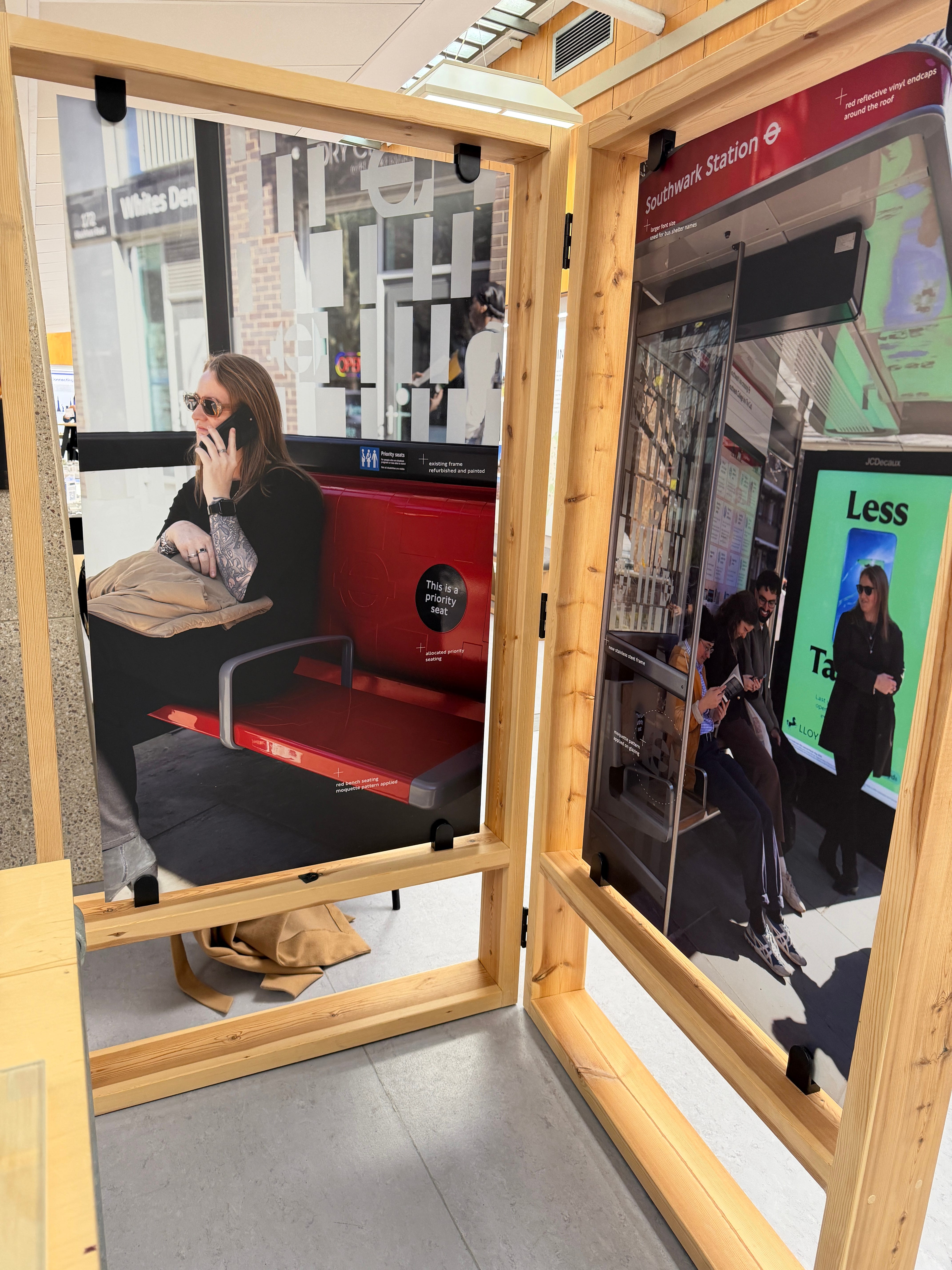
The design for the shelter is, at first glance, very familiar - it’s probably the sort of thing that an ordinary person wouldn’t notice was any different until you point it out to them.
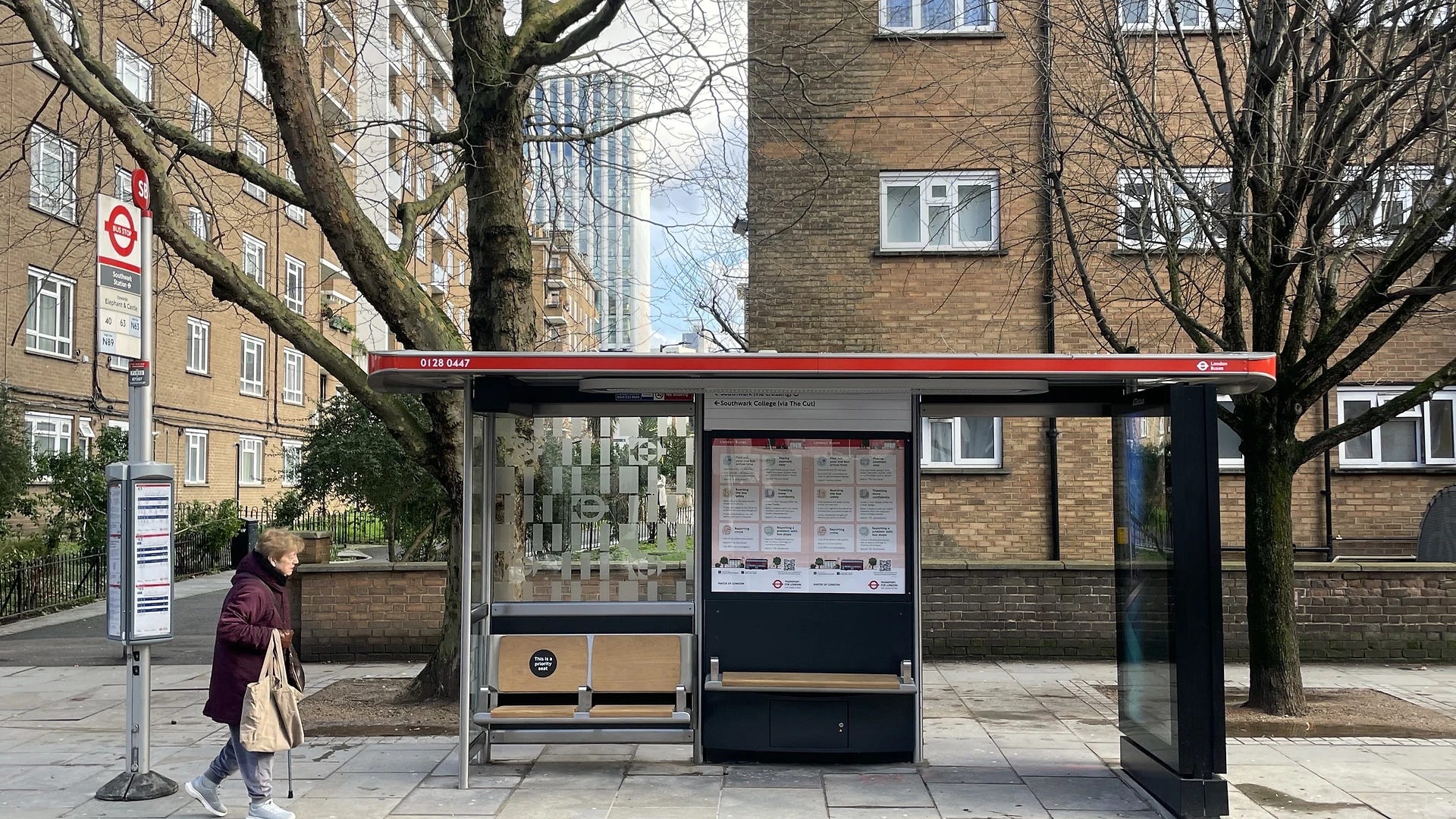
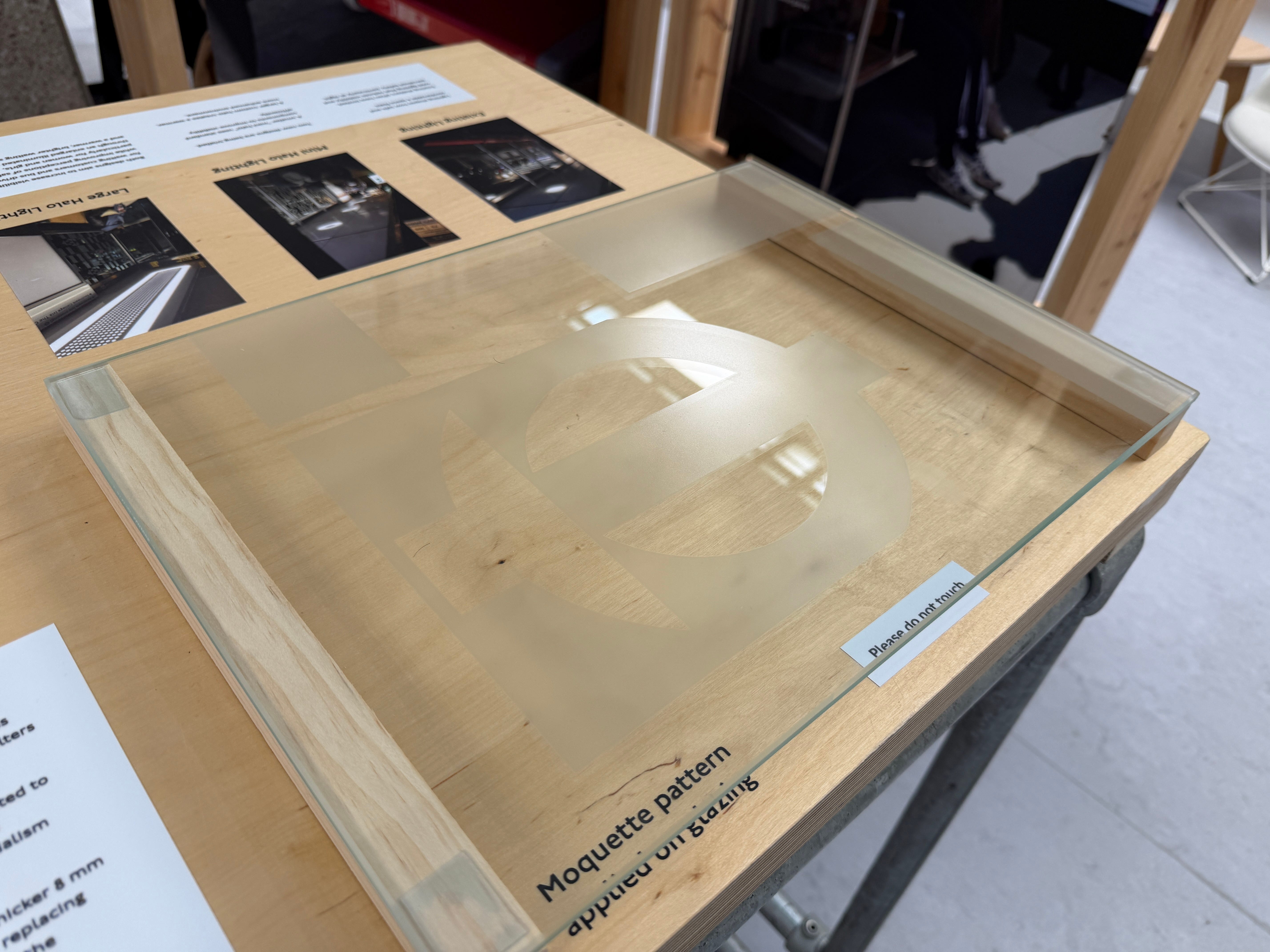
Changes to the status quo include actual bench seating rather than perches, better lighting, and patterned glazing that presumably is intended to reduce vandalism in the same way as the Berlin U-Bahn does with its trains.
The red end caps with the stop name are now extended all the way around the roof of the shelter, with increased text size and the use of retroreflective vinyl to enhance visibility at night. This sounds nice, but I noticed one bus stop with a typo on the shelter the other day, and then another a few days later, and I’m really starting to question how many there are out there that are wrong. Perhaps we should be focusing on getting details like this right?
At the exhibition today (and I use the term ‘exhibition’ very loosely - TfL just had a table with some materials on it, surrounded by some posters) they had samples of the existing normal red and the new retroreflective red vinyls (helpfully the wrong way around) and despite holding my phone light up to them as suggested, I ended up convincing myself that the new one was in fact the old one, or in other words that the better one was the existing one in use on shelters already.
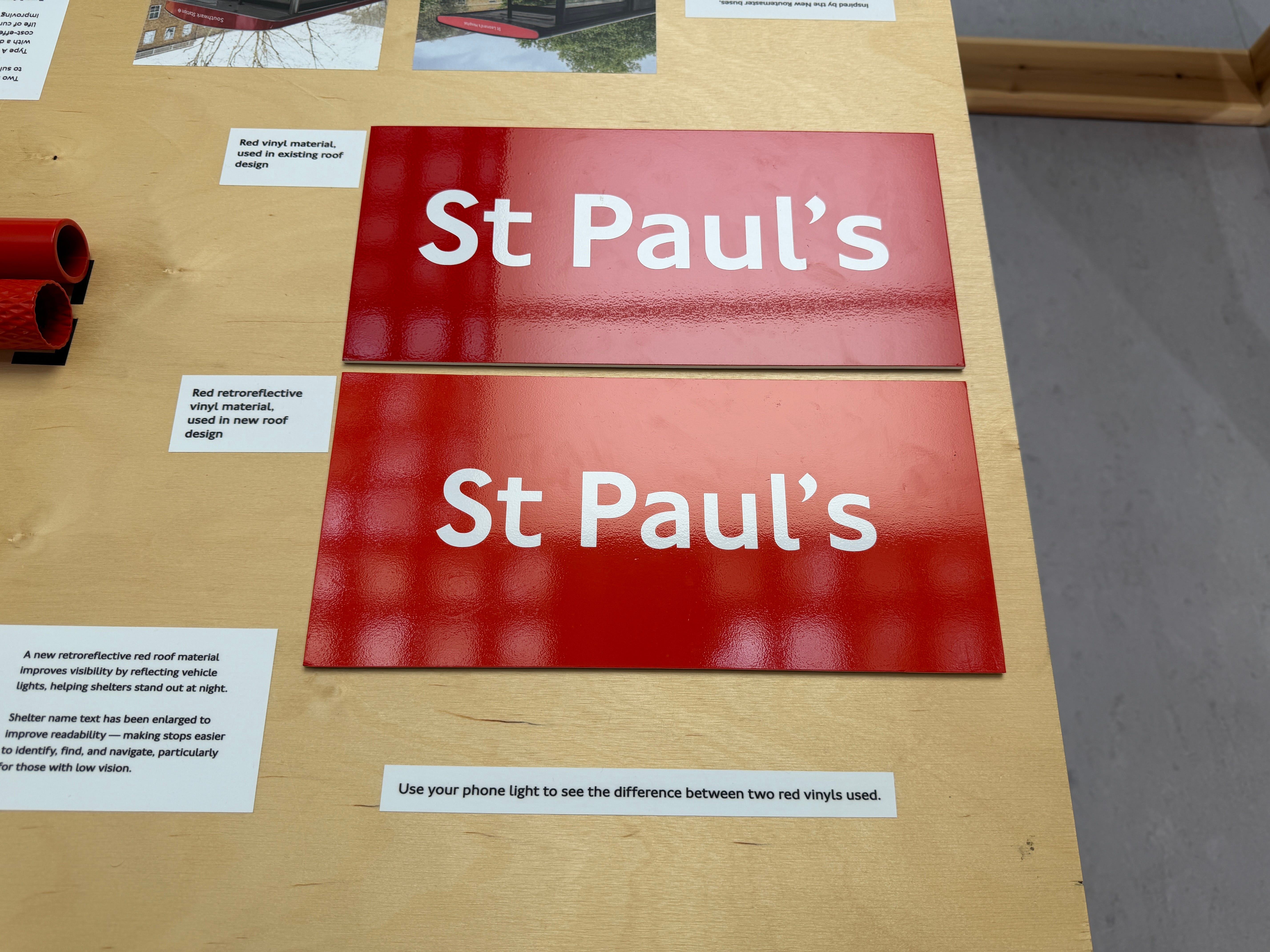
Whatever the level of retroreflectivity, it wasn’t anywhere near what you’d get on, say, a road sign, and I question whether there’s actually any utility in the roof of a bus shelter glowing in peoples’ headlights when it’s already lit up anyway (with “enhanced” lighting, no less…)
Shelters will also feature CCTV, which is a first, and is something that would’ve been really useful to have that time I was mugged in one (an unfortunate experience I wrote about in one of my more exposing posts The bus wasn’t coming., which I recommend.)
The pattern applied to glazing is also used elsewhere in the design such as on seating, and it turns out is actually the same one used in the Red Bus Moquette, which I’m forever a fan of and so pleased to see being used more and more since I last mentioned it.
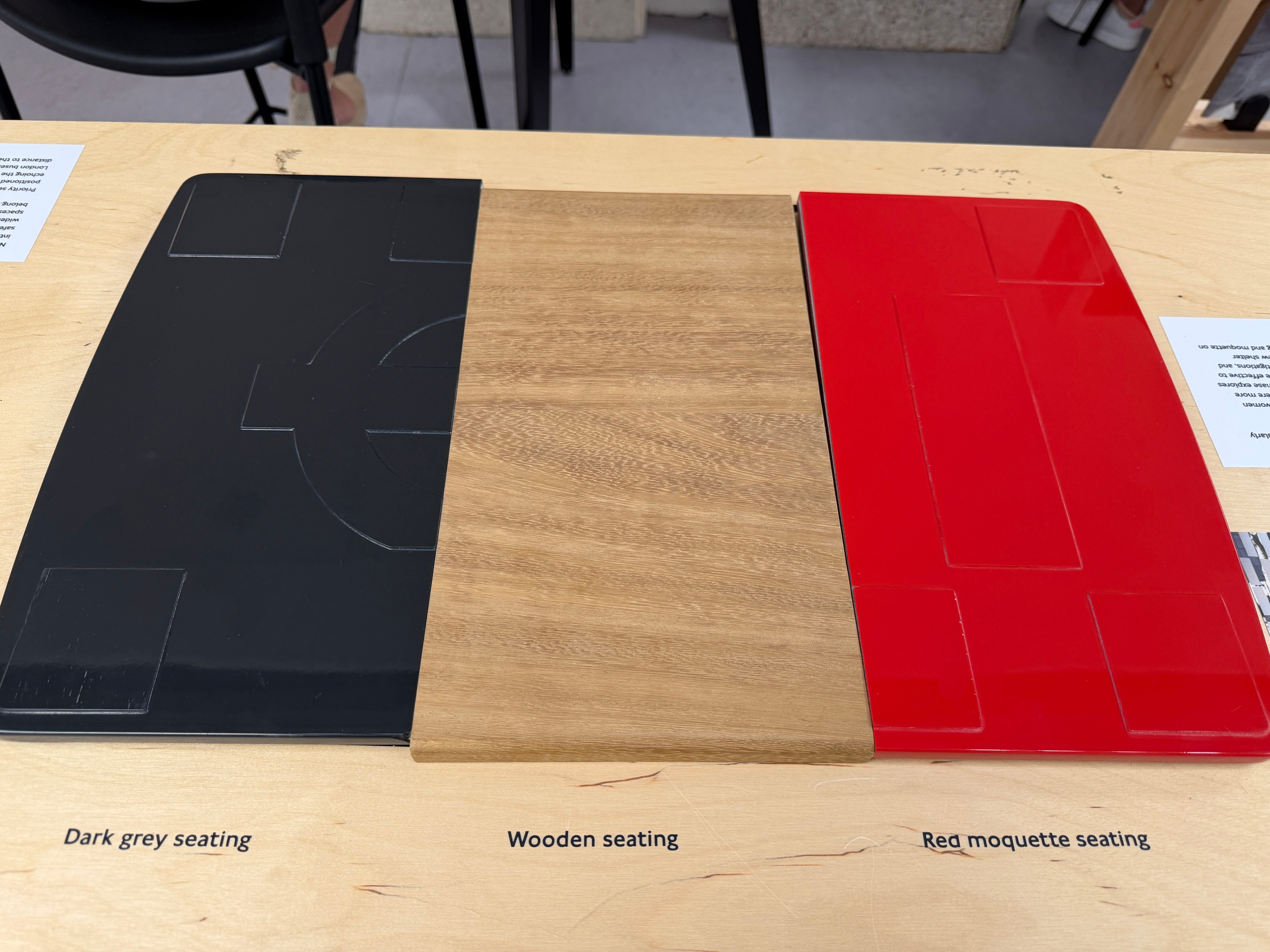
Seating is available in three different styles - red, grey and wooden. There are samples of each that you can pick up and uh… put back down again as there’s not really much to really look at about them. The wood is nice, but I don’t know if it necessarily works or will last in London.
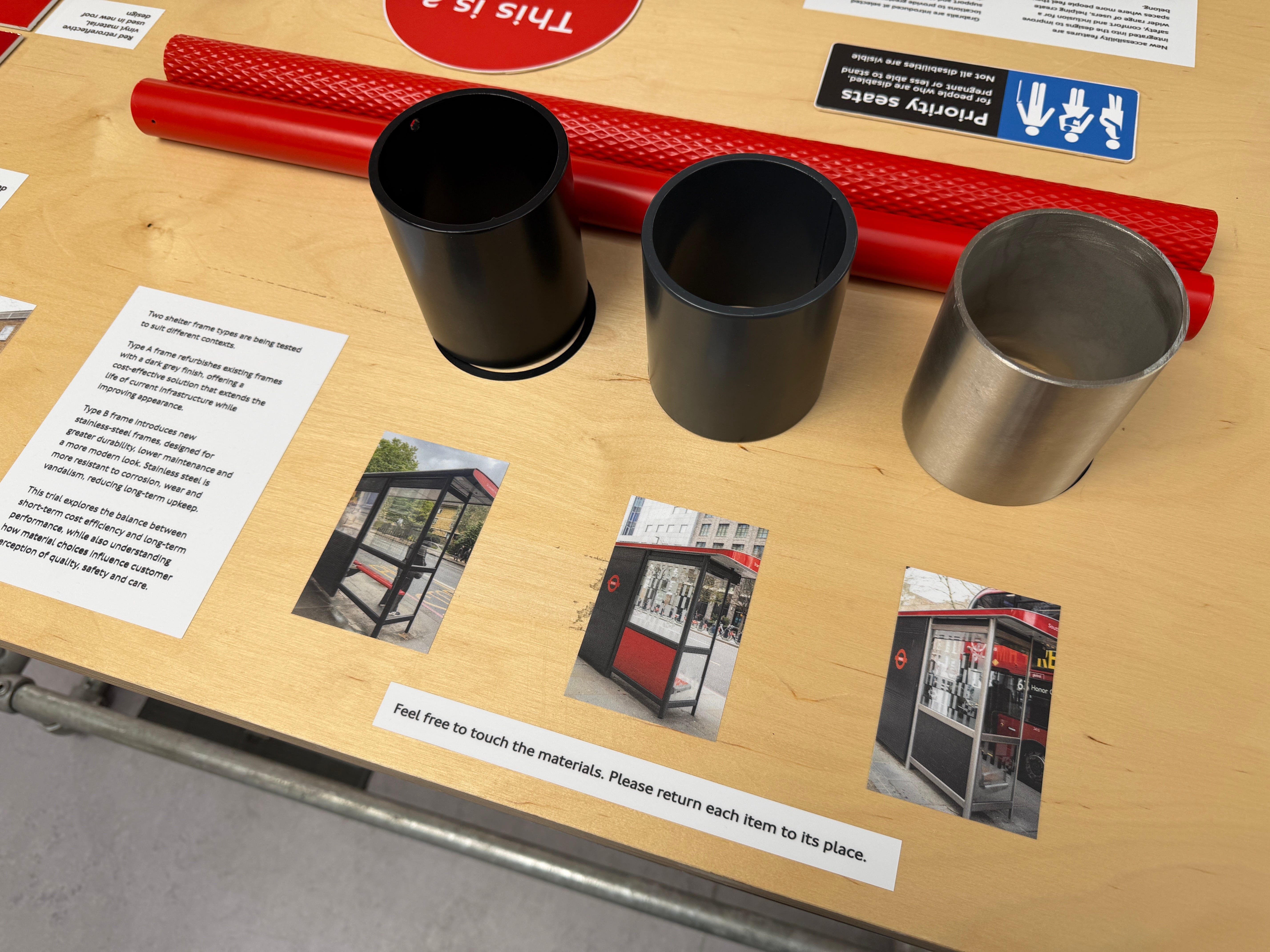
There are also some chopped up bits of bus shelter tubes, including the new style “Type B” which is made from stainless steel. Older shelters can be refurbished with their “Type A” tubes painted in dark grey rather than the current black.
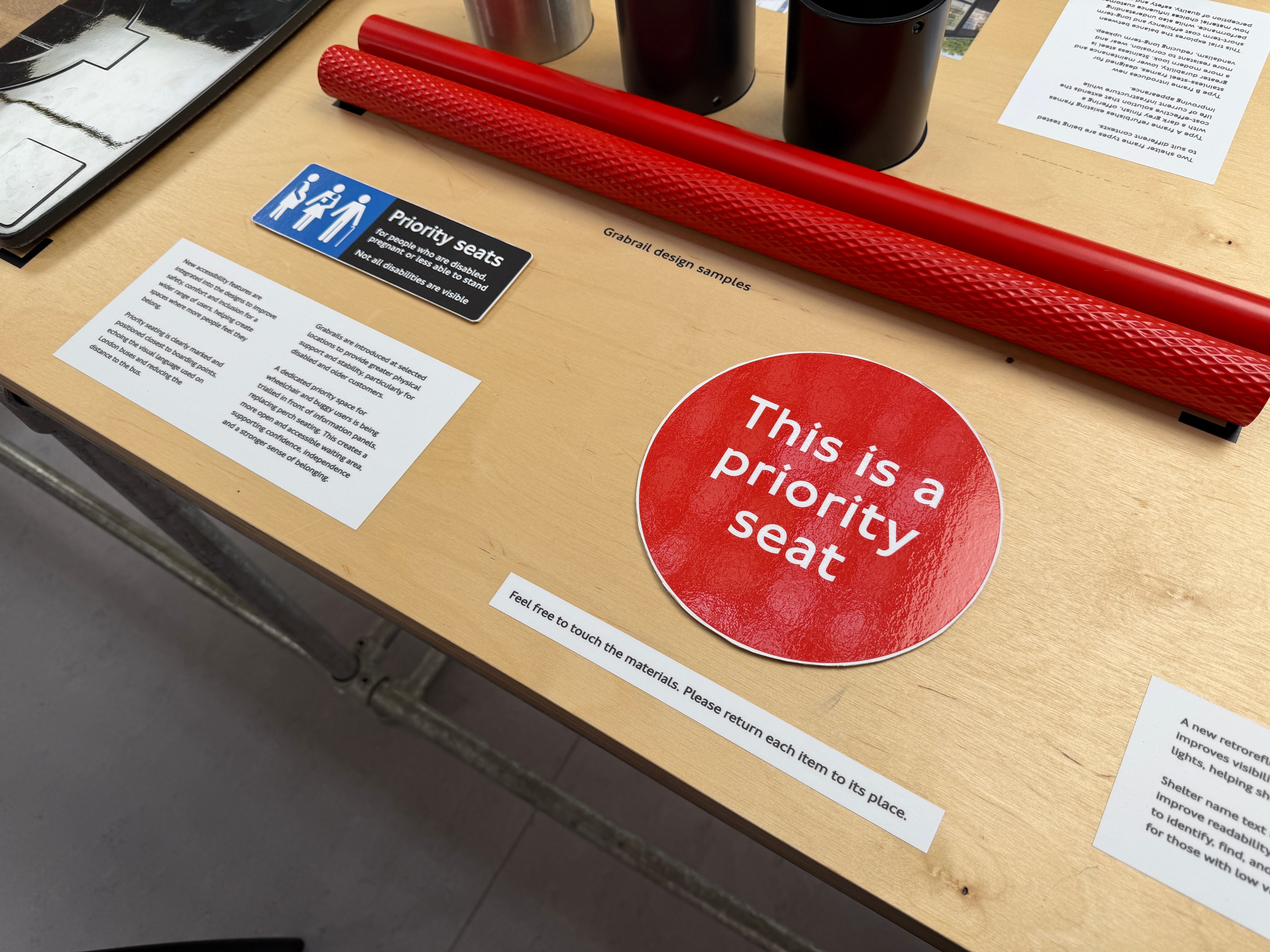
I also want to make an honourable mention to the nobbly grab pole that was there. When I was growing up, all poles on buses were nobbly, and then all of a sudden they were not. It’s nice to see that nobbly grab poles are still a consideration, where did they go?
I can’t help noticing that these new bus stop designs seem to be in part a roof replacement for existing ones and a lot of justification bolted on. Anyone who’s ridden a double decker and paid attention will see that there’s clearly something wrong with existing shelter roof designs and there are four mounting points on the top that seem to just get gummed up with some sort of sealant. (Ok, maybe it’s just me who’s noticed this.)
The real star.
Anyway, the real discovery from this little outing was that in the very same room lay this:
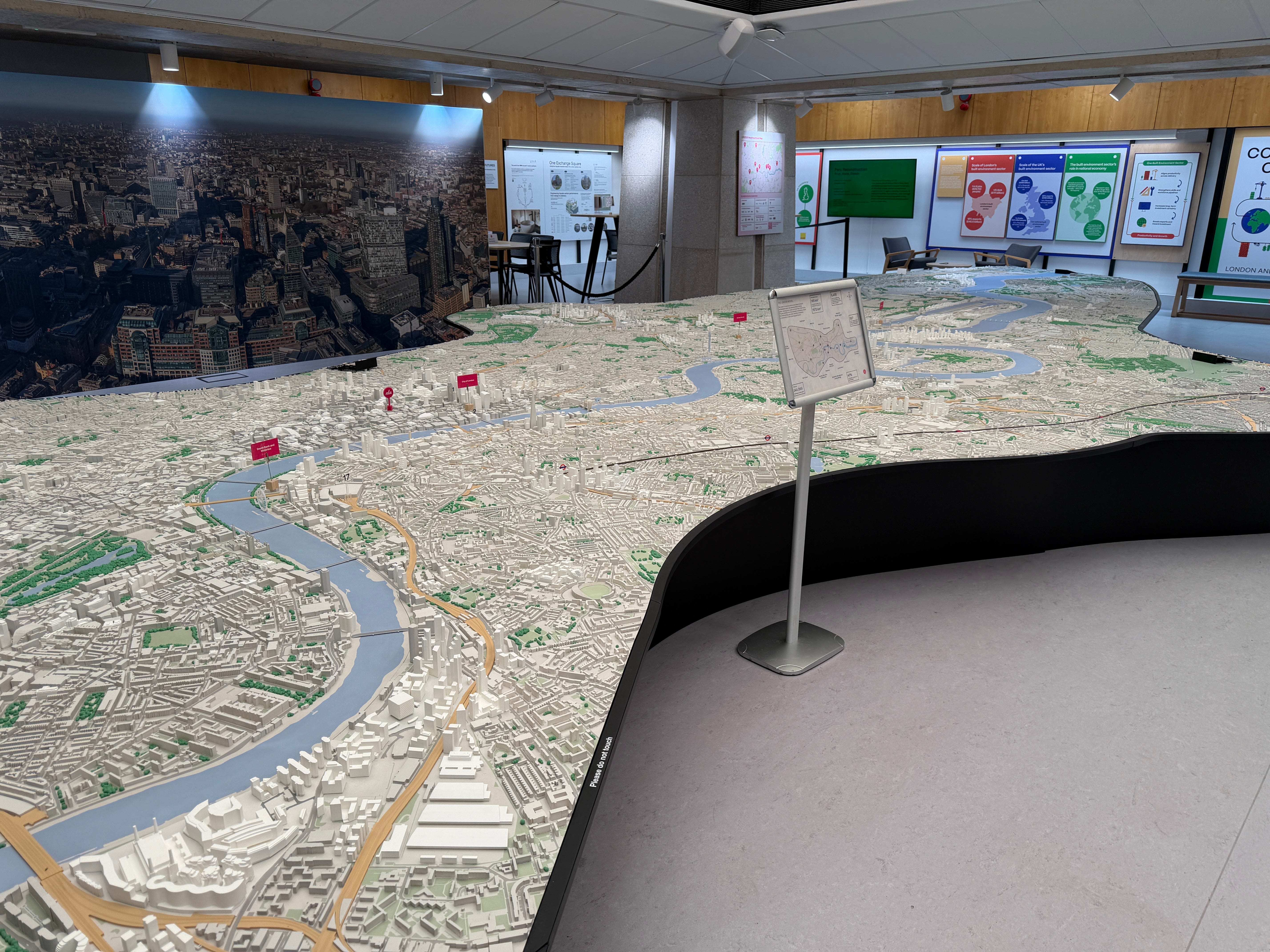
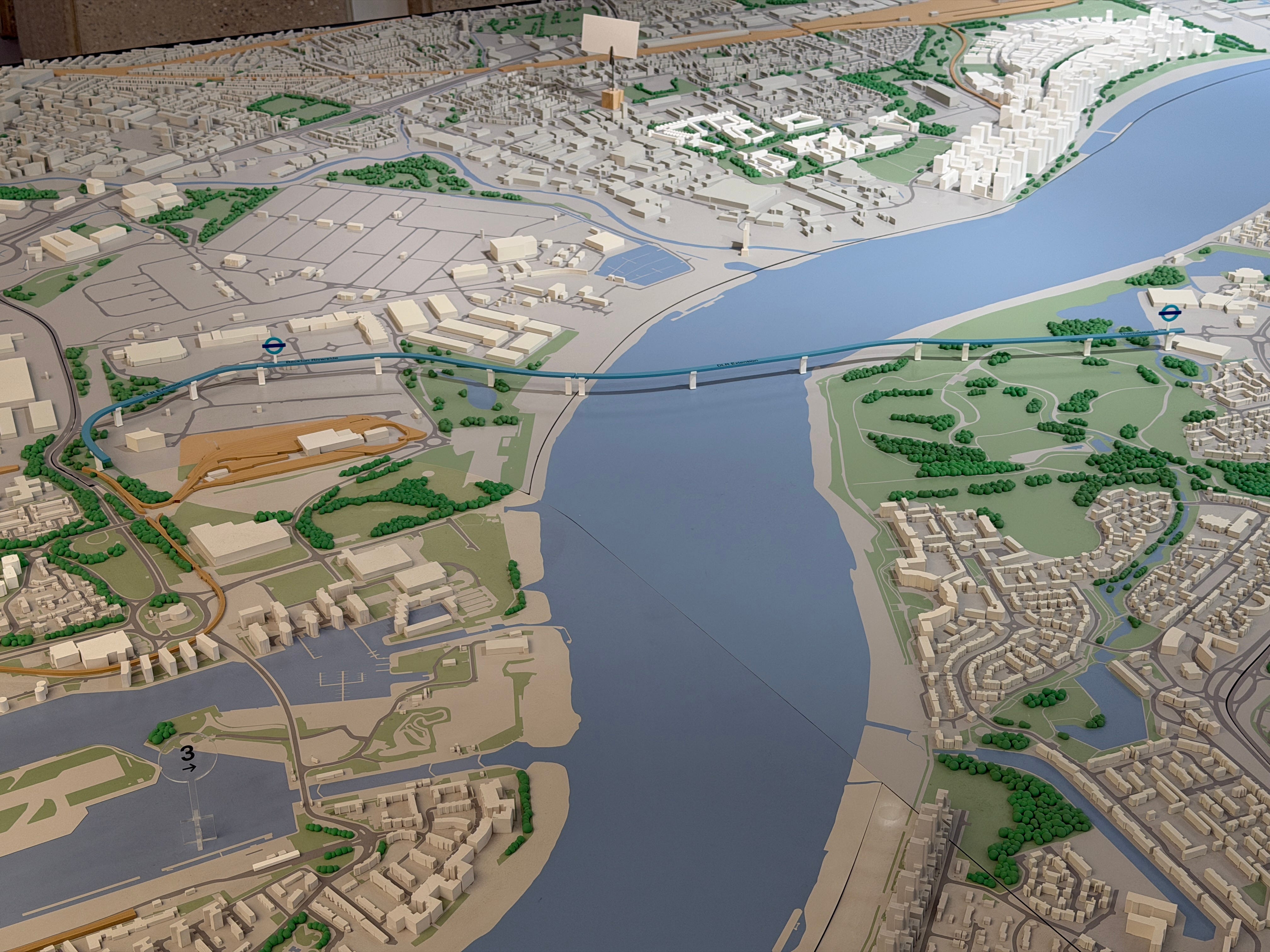
This is The New London Model, a 1:2000 scale model of central (and also not-so-central) London. It is one of the most jaw dropping things I have ever accidentally discovered.
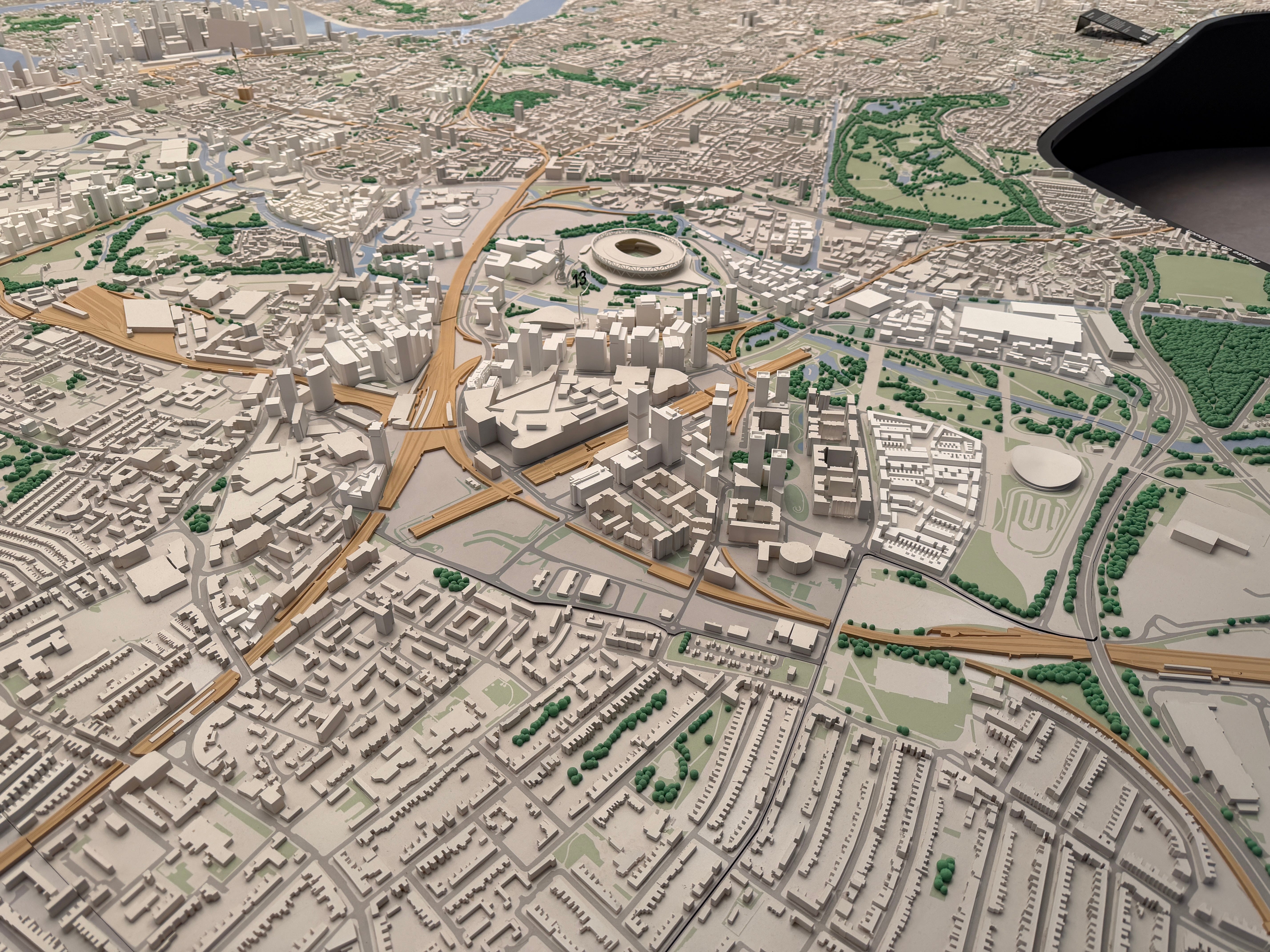
I only have a few photos because I was too engrossed in mentally finding my way around it, and finding places I knew.
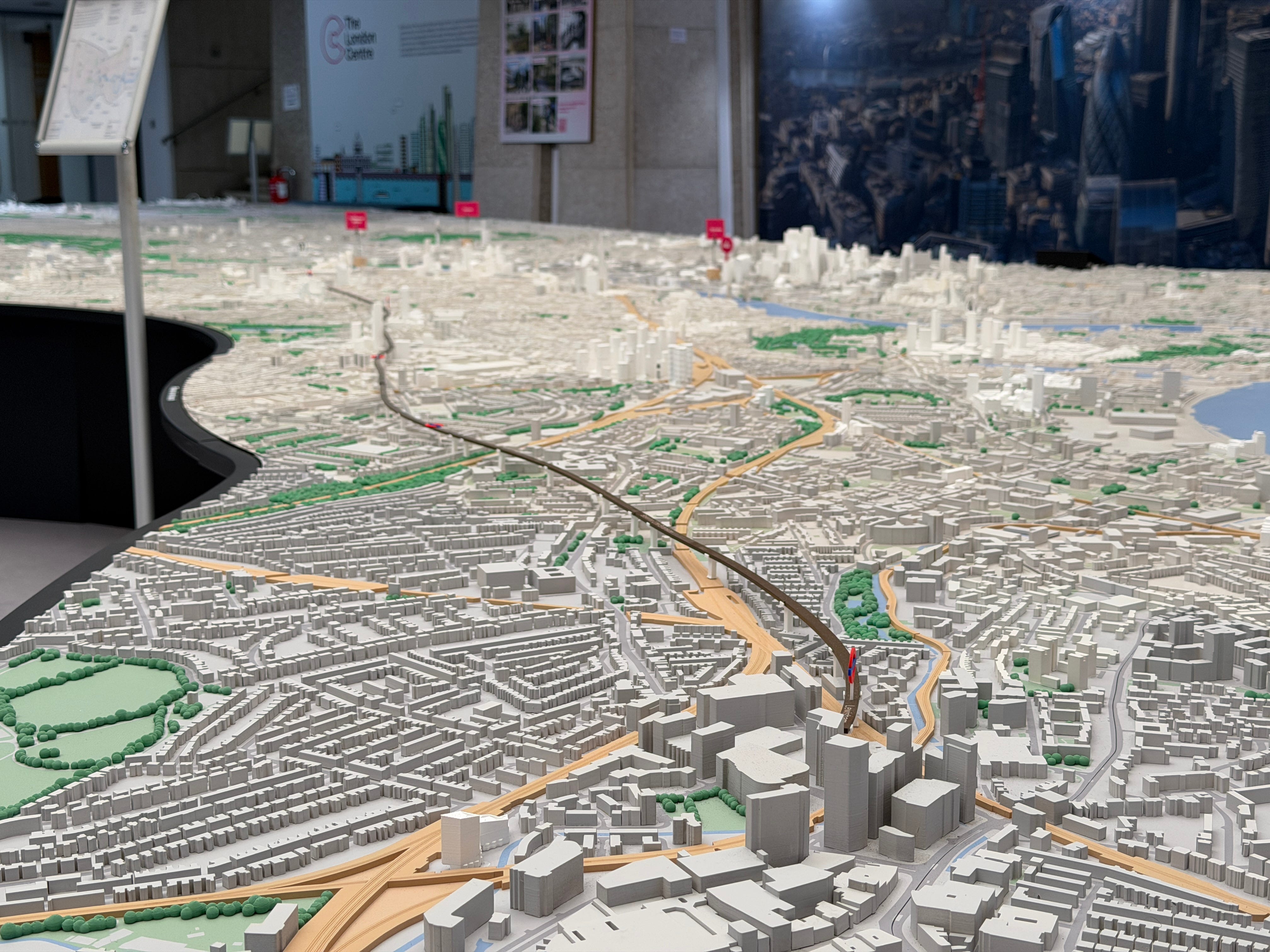
Of note, they have marked proposed extensions of the Bakerloo line to Lewisham and the DLR to Thamesmead. I did actually spend time looking at just how far away the Woolwich ferry terminal is from Thamesmead, because I’m still genuinely annoyed about it after my day on the Superloop.
There was also the City of London model, in larger scale, but somehow this seemed less impressive in its scope, and so apparently I didn’t bother taking any pictures of it.
-
In the end I think I can kinda be forgiven for not quite focusing quite so much on the bits of chopped up bus stop that TfL had on a table, as nice as it was to see.
Would I recommend going out just to see this so-called-exhibition? No. But if you would like to see a mahoosive really impressive model of the city, then by all means do. I kinda wanna go back and just take more of it in.
Did everyone already know this existed and was here?
The model is a permanent exhibition at The London Centre, and is open to the public from Tuesday to Saturday. Details here.
TfL’s exhibition is in the same room for the month of June. Details on that here.
(n.b. This is not IanVisits.)
Super cool, thanks for writing about both of these!
It's good to see real seats! One beef of mine has been the location of the bus information posters. Often, if you want to consult one you have to lean in over someone who is seated beneath it. Sticking them on the back as well as the front would be a very helpful move.
The leaning over seated passengers problem occurs on just about all Tube trains too. The "Central London" map has such tiny detail that you'd need binoculars to read it if you don't want to seriously annoy the other passengers. Their idea of "Central" is bizarre. Cut the area and enlarge the detail!