

The GBR clock is a bit pants.
A railway clock probably shouldn't require explaining.

tl;dr: The new railway clock looks nice, but complicates telling the time in an environment where seconds matter.
Great British Railways (or GBR) is the name for the UK’s new state-owned railway company. After years of being run by a crowd of private entities (several of which were owned by other governments…) as part of the UK’s bizarre railway privatisation experiment, the plan now is to bring aspects of the rail network back in-house.
I really like this idea, and I’m genuinely excited to see what comes from it. But that’s by-the-by.
Today I’m talking about the clock.
The clock
In October - to coincide with Railway 200 celebrations - a new GBR ‘national clock’ was unveiled at London Bridge station. It looks like this:
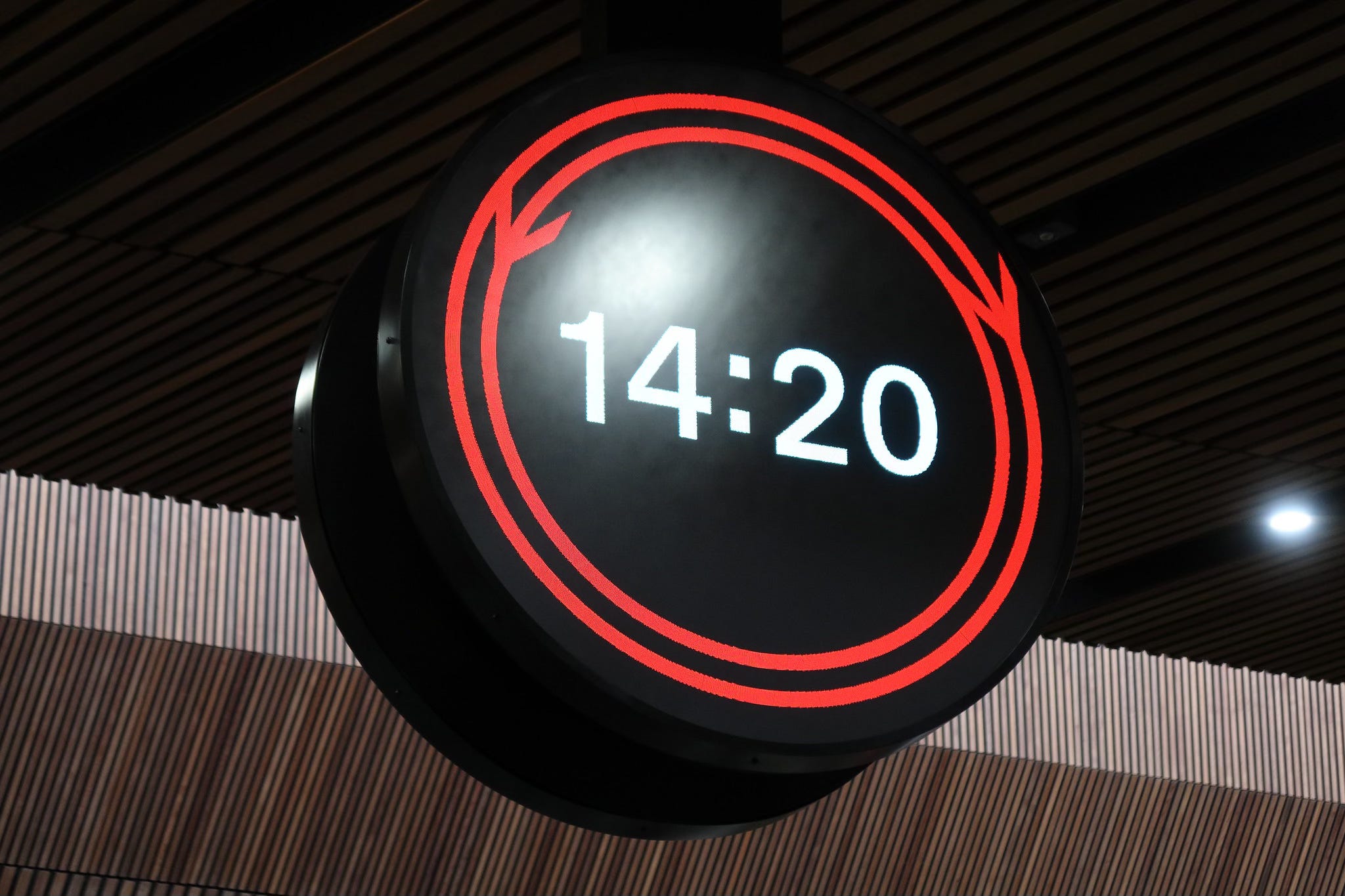
It has the time (hours and minutes) in white on a black circle, with two red rings with the British Rail double arrow split and animated in either direction around it. While it’s kind of pretty, it’s probably not what most sensible people would come up with when presented with a circular canvas and asked to represent time.
When it was first announced, I was mostly just impressed that enough joined-up thinking was happening for there to even be consideration of a new “national clock” - a world away from the fragmented railway system I’ve known my whole life.
Here’s the ever-charming Tim Dunn introducing it on Network Rail’s YouTube channel:
And anyway, it tells the time, so you know, what’s to complain about?
The railways run on seconds
I hadn’t really thought about it (probably as a result of not yet actually encountering it in the real world) but having started seeing comments and giving it more than a second’s thought, it’s now rather apparent that - functionally, at least - this isn’t good.
The railways run on seconds - and seconds make all the difference.
“Doors close up to 30/45/60/75/90 seconds prior to departure.”
Is my train leaving in 61 seconds or 119 seconds? How can I tell?
“Well ACTUALLY” - a particular type of person will no doubt interject - “the seconds are represented by the position of the arrow on the red circle.”
But to them, I say simply: No.
This is not how you design things for people to use.
Problematic
The problems are kinda fundamental, and all stem back to seconds.
First, it’s presented as a digital clock. On the face of it (*knowing look over glasses*), the hours and minutes are represented numerically. You shouldn’t then have seconds represented in an analogue clock style (let alone an obscure abstraction of one).
This mixes two paradigms together for nothing more than artistic licence and creates something that nobody is expecting to interpret.
It requires people to effectively read two different clocks and then put the values together. What if an analogue clock was made up of three circles, each with a single hand, to represent hours, minutes and seconds? That’d be annoying, right? It’s the same sort of thing.
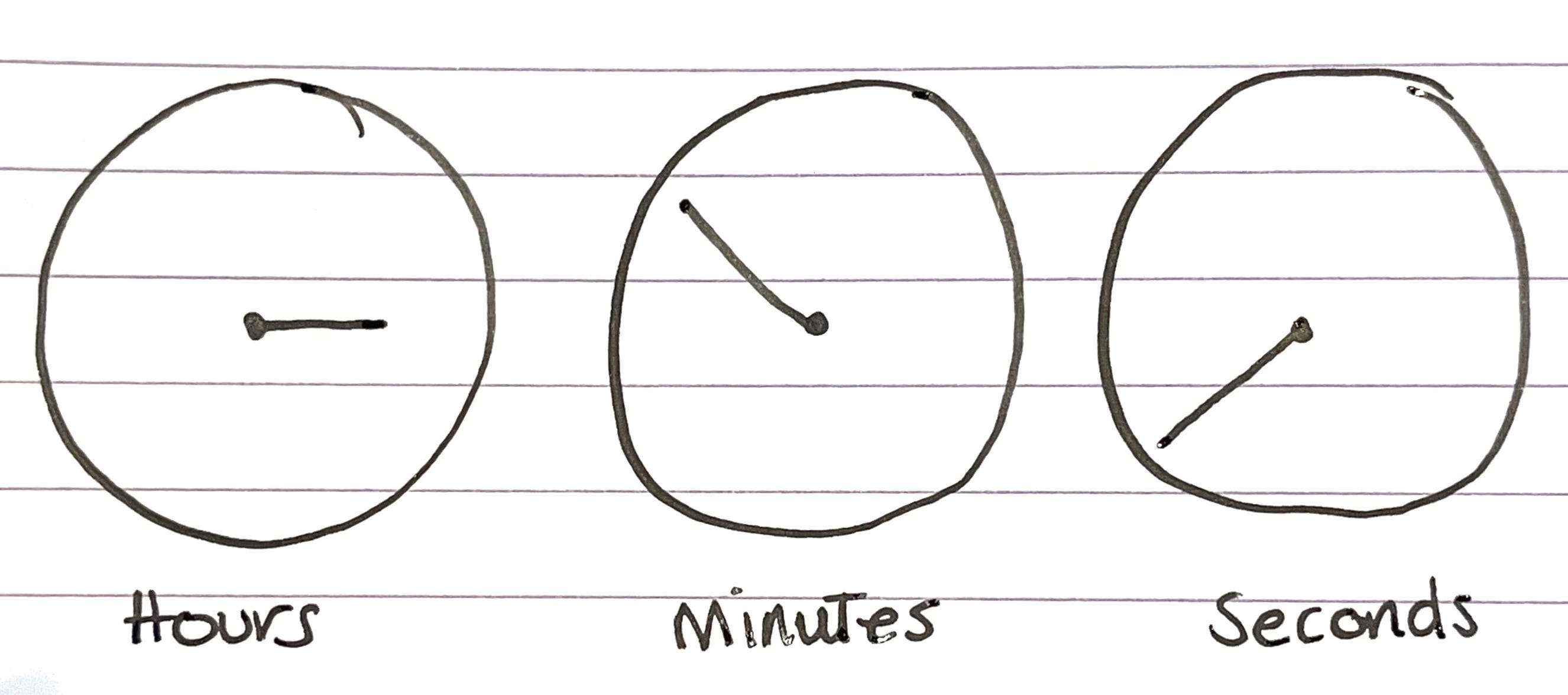
And then there’s nothing to suggest to someone encountering this for the first time that the position of the arrows even represents seconds - it’s not really discoverable. iykyk, but if you don’t, why would you even consider it? Public information shouldn’t be trivia in a Secrets of the Railways video, it should be obvious. The arrows’ animation is constant, and one of them is moving anti-clockwise - to the casual observer, they’re simply a visual flair on the part of the designers.
And all of its users are casual observers - it’s a clock in a train station.
The final problem comes about by there being two arrows going in opposing directions to represent seconds. Only one of them is actually directly useful. If we go back to the analogy of a three-faced analogue clock, this is “why not put two seconds hands on the last one, and have one of those go backwards for the sake of it?!”.
The way that the arrows are used adds an extra layer to telling the time. Because there are two arrows moving in opposing directions, even if you know they represent seconds, you have to first identify which one you want, and then disregard the other one. This means seeing them in motion, or identifying which way each arrow points, and then disregarding the one you don’t want.
The thing about clocks is that they don’t require sustained observation to interpret - if you take a photo of a clock, digital or analogue, you can look at that photo and know what time it was when it was taken. The position of the hands or the numbers shown tell the time in that instant.
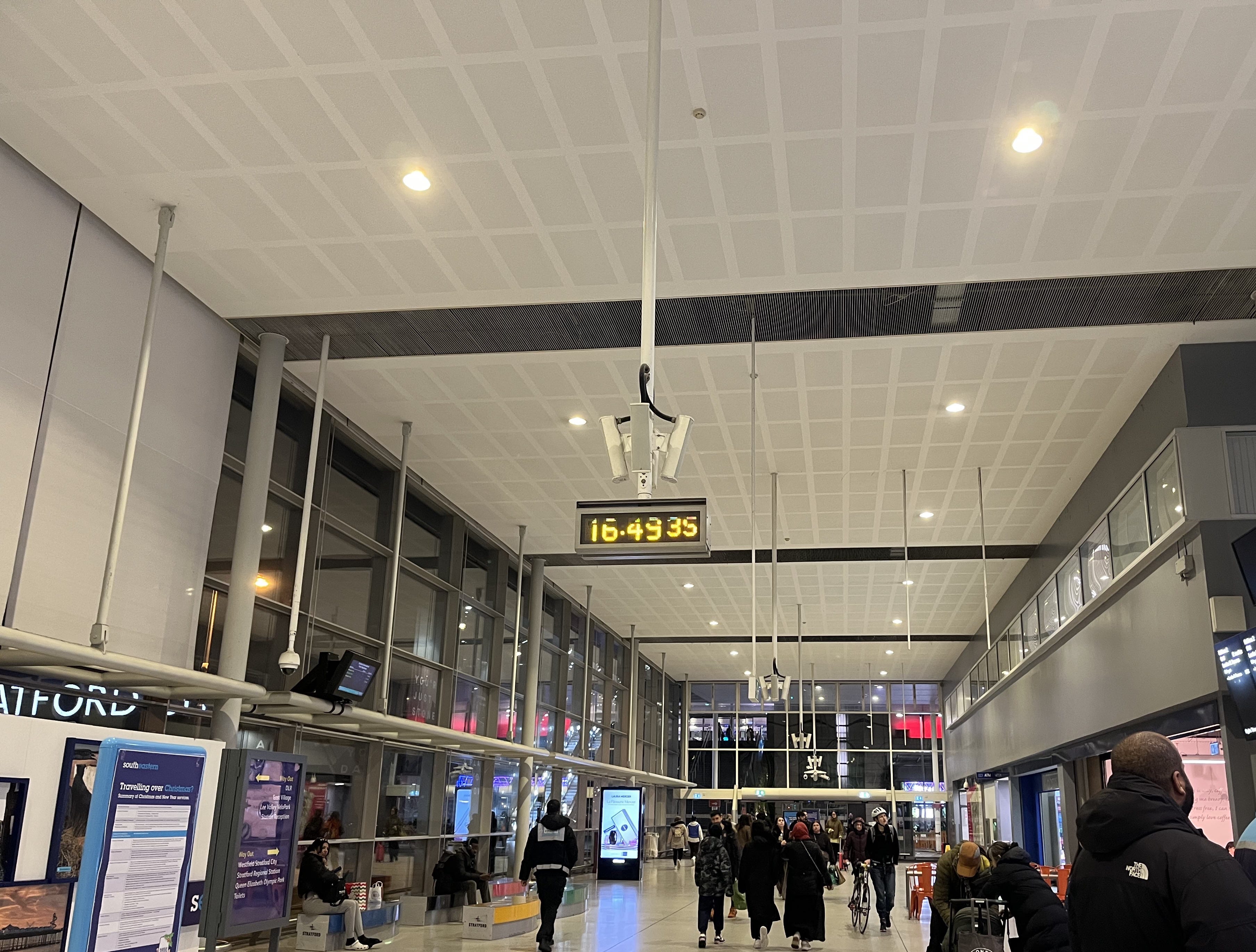
If you’re visually impaired (or even if your eyesight is just poor), it might not be possible to work out which arrow points either way, even if you can read the hours and minutes. You’d have to dedicate more of your attention and time to watch them move in order to determine seconds.
And seconds are most important when you don’t have much time to spare.
On the name
As a tangent - I really dislike the name for GBR. There’s a trend in politics right now wherein everything needs a flag on it and to be GREAT BRITISH and honestly, it leaves a bad taste in my mouth. We don’t do that sort of thing...
Before privatisation, there was British Rail. I’m not old enough to remember it (my grandmother still thinks it exists) but it seemed like a good name. It’s one of few ‘British X’ brands that didn’t get sold off. But the new brand will be Great British Railways… Why?
To me, GB-anything screams GB News - a TV channel set up a few years ago to be the UK’s Fox News - and that’s not something you really want to be aligning yourself with, probably. I suppose there’s Team GB in the Olympics, but that’s the other way around.
And why Great British? Great Britain is just the name of this rock, that happened to be great in size, from which things are British (OK - debatable, it gets complicated). But not Great British, in my opinion, unless they also happen to be great. Nobody says “Great British”, unless they’re talking about bake offs. Given GBR have yet to operate a single train, it’s probably a bit early to say if they’re any good, so perhaps let’s not just throw that cheeky adjective in there so it sounds good on media rounds?
Iconic
From the day of its unveiling, the clock was being described as iconic, but that’s not how iconic-ness works. You can’t force something to be iconic, especially not when it’s actually just a bit naff.
The Swiss railway clock, for example, is actually iconic - but what it also has going for it is that it’s functionally a good clock (minor details, apparently). It’s also worth noting that the design adds extra emphasis to the seconds hand, rather than trying to disguise it. And the British Rail double arrow is pretty iconic, even literally - it’s the symbol for the railway in the UK, something that’s persisted long after BR’s demise.

But this clock isn’t iconic.
I can see how they ended up with the design they did and can imagine the thought process that went into it - if you start off with the double arrow and the clunky Rail Alphabet 2 font and need to make a clock, there’s not a lot of room for big ideas. And visually, it’s really not bad at all - I like it, but in this type of environment you can’t sacrifice the clear representation of important information in the name of branding.
The design was selected from over 100 entries to an official design competition run by Network Rail, the Royal Institute of British Architects and the Design Museum, which makes the end result all that little bit more puzzling - I’d really like to see the other submissions that were made.
I can’t help feeling this isn’t a clock - but a piece of art that just so happens to also show the time in an unconventional and distinctly awkward fashion.
And if you look at it with all of that in mind, it’s kind of hard to argue really:
It’s just not very good, is it?